

Pelvic Floor Physical Therapy for Perimenopause & Menopause
Menopause is about more than hot flashes, hormonal changes, and night sweats. Despite affecting half the population, menopause is still widely under-discussed, and many people, including healthcare providers, receive little education on the topic. As a result, many women struggle unnecessarily with symptoms that can often be improved through safe, effective treatment and support.
Perimenopause, the transition leading up to menopause, often begins in a woman’s 40s, with most women reaching menopause by their early 50s. While hot flashes and mood changes are commonly discussed, hormonal shifts can also affect bladder, vaginal, and pelvic floor health in ways that are often overlooked.
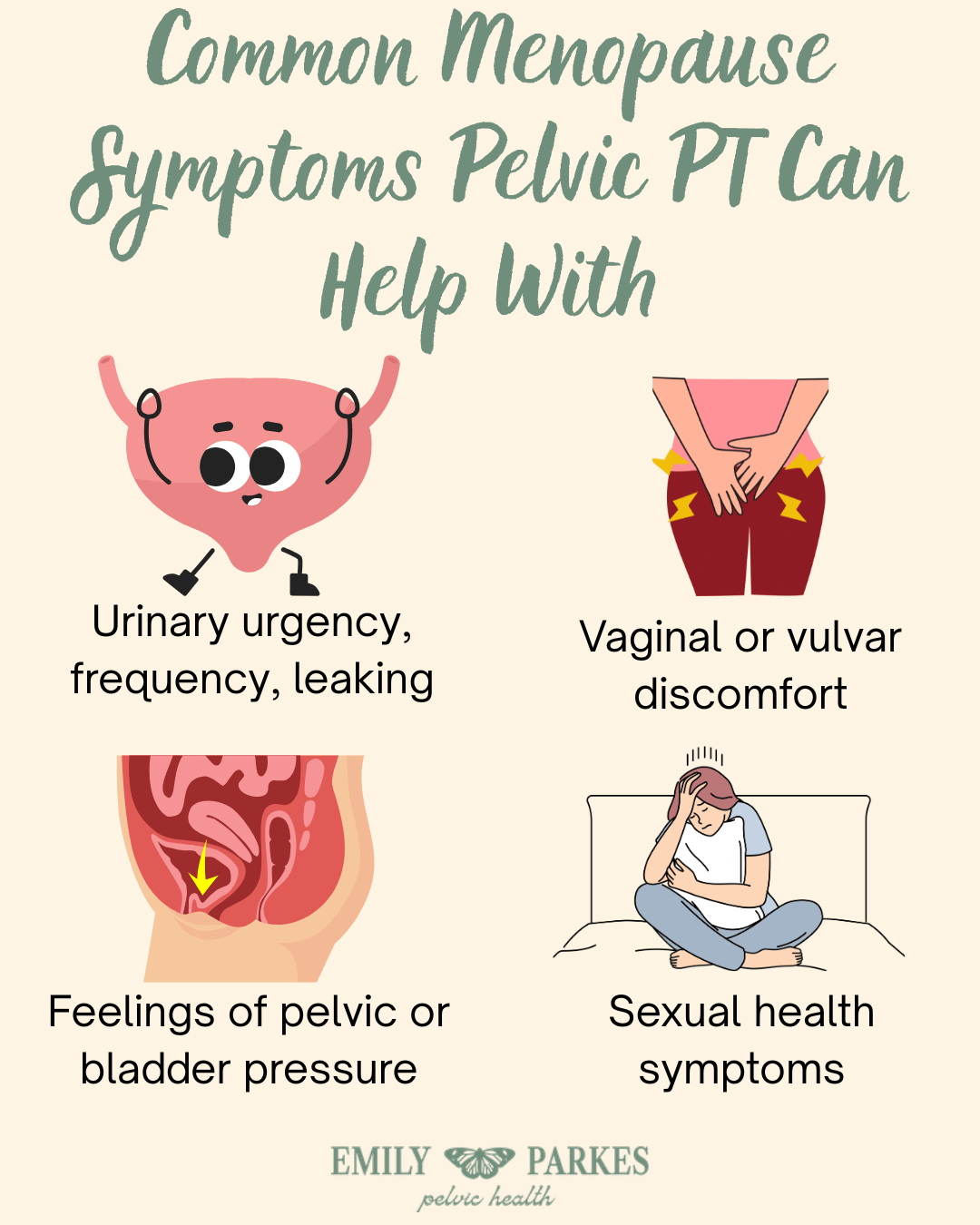
During this time, some women begin to notice symptoms such as painful intercourse, urinary urgency or frequency, leakage, burning, vaginal dryness, or recurrent urinary tract and vaginal infections. These changes are often part of what is known as Genitourinary Syndrome of Menopause (GSM), a common but under-recognized condition related to hormonal changes.
Many of these symptoms can overlap with pelvic floor dysfunction, which becomes increasingly common with age and affects nearly half of women by midlife. The good news is that support and treatment options are available, and many symptoms can improve with the right care.
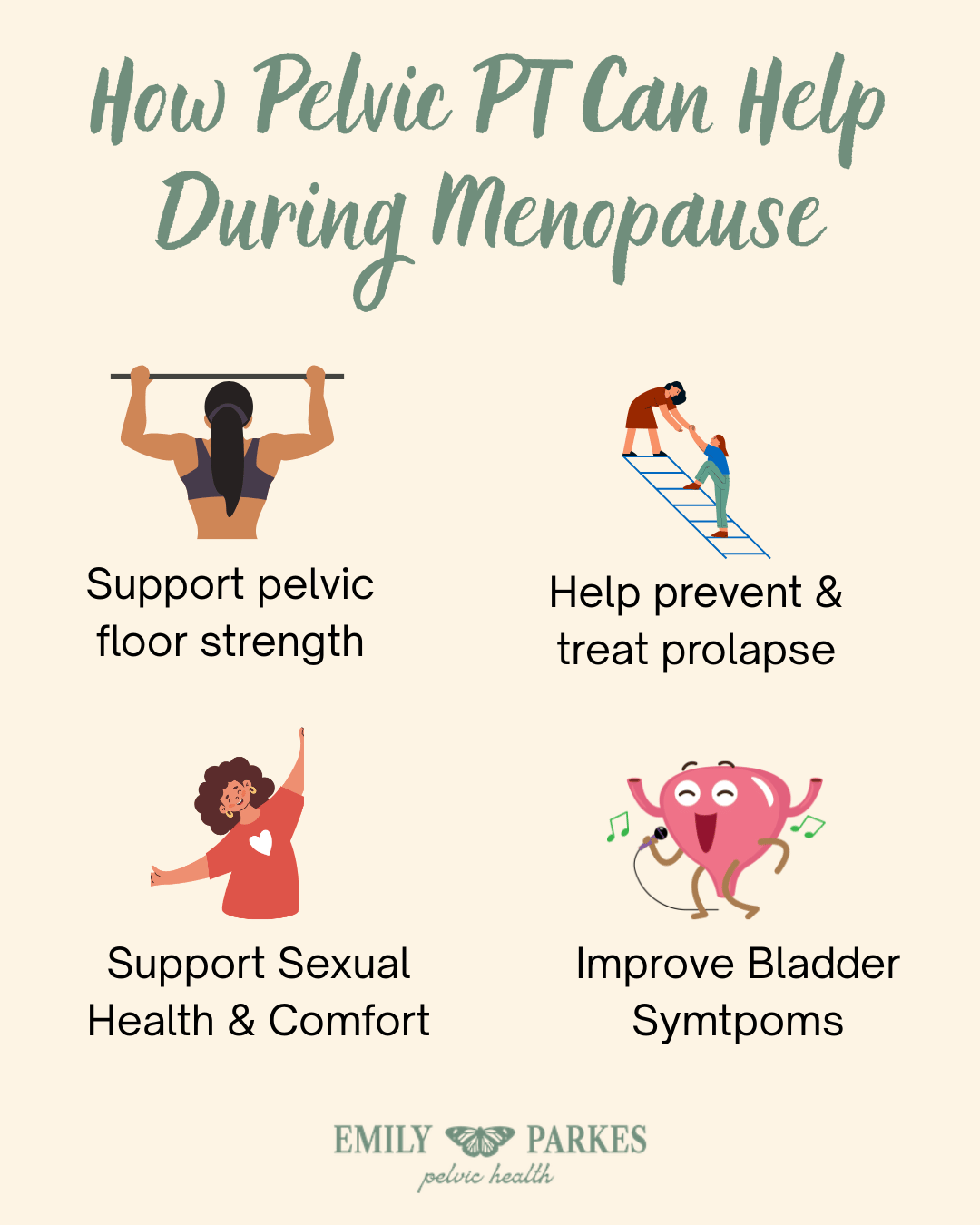
A knowledgeable pelvic floor physical therapist or medical provider can help assess the many factors that may be contributing to symptoms during menopause. This may include an assessment of the vulvar and vaginal tissues, pelvic floor muscles, areas of pain or sensitivity, pelvic organ support, and overall bladder, bowel, and sexual function.
Hormonal changes during menopause can affect the health of the vaginal and vulvar tissues over time, often contributing to symptoms such as dryness, irritation, painful intercourse, urinary urgency, leakage, or recurrent infections. At the same time, changes in the pelvic floor muscles and surrounding musculoskeletal system can also play a significant role in discomfort.
Because of this overlap, many women benefit from both medical management and pelvic floor physical therapy. A combined approach can help address tissue health, pelvic floor function, bladder and bowel symptoms, and discomfort with intimacy to improve comfort, confidence, and quality of life.